
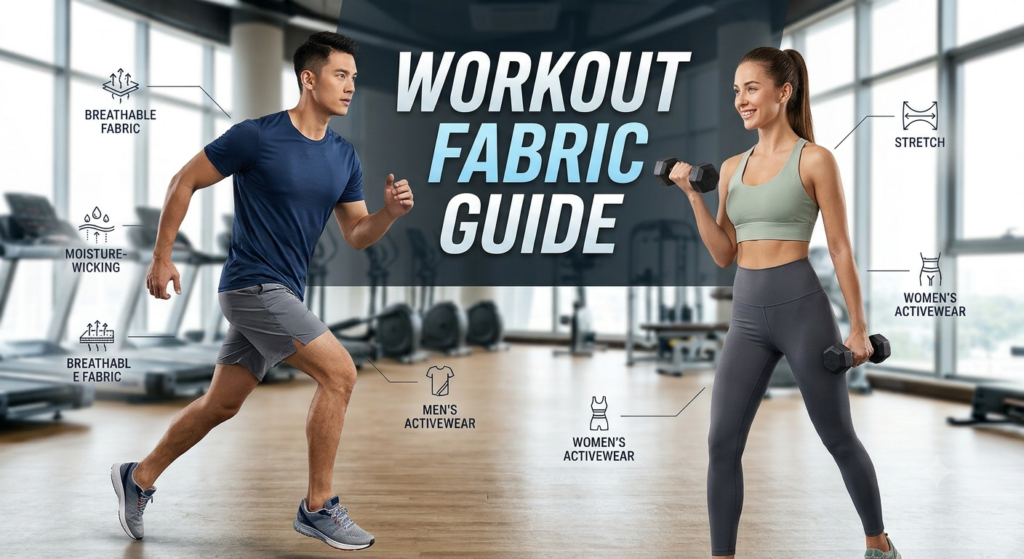
Workout Fabric Guide
share Workout Fabric Guide: The Power of Moisture-Wicking Clothes Whether you are pushing through a high-intensity interval training (HIIT) session, lifting heavy, or logging miles on the trail, the activewear you choose directly impacts your comfort and endurance. Wearing the wrong material can turn a great workout into a soggy, chafing nightmare. This ultimate workout fabric guide breaks down how modern athletic apparel works and reveals why upgrading to moisture-wicking clothes is the smartest choice for your fitness routine. 1. The Science Behind Moisture-Wicking Clothes How do performance garments keep you dry when you are sweating profusely? It all comes down to engineered fiber chemistry and capillary action. Standard natural fibers like traditional cotton act like a sponge. They absorb liquid into their inner cores, becoming heavy, wet, and slow to dry. In contrast, moisture-wicking clothes rely on synthetic microfibers or specially structured natural yarns designed with two key properties: Hydrophobic (water-repelling) properties: These inner fibers prevent sweat from soaking directly into the yarn structure. Capillary channels: Tiny microscopic channels transport liquid outward away from your skin to the outer surface. Once sweat reaches the outer layer, it spreads across a broader surface area and evaporates rapidly into the air. This rapid evaporation helps maintain stable body temperature regulation, prevents painful skin chafing, and keeps your activewear feeling light throughout your workout. 2. Top Synthetic Fabrics for Sweat-Heavy Workouts Synthetic fibers dominate the athletic market for a clear reason: they deliver top-tier moisture management and fast drying speeds. Here is a breakdown of the primary synthetic materials featured in modern moisture-wicking clothes: Polyester: The gold standard of activewear. Polyester fabrics absorb less than 1% of their weight in moisture, dry extremely quickly, and offer high durability against frequent washing. Nylon: Known for its soft touch, high abrasion resistance, and excellent stretch recovery. Nylon blends are ideal for form-fitting leggings, sports bras, and mobility training gear where flexibility is critical. Spandex (Elastane): While not inherently moisture-wicking on its own, spandex blends add essential four-way stretch to polyester or nylon garments, giving you full freedom of movement Fabric Type Wicking Speed Drying Speed Durability Best Activity Polyester High Very Fast Excellent Running, HIIT, Gym Nylon High Fast High (Abrasion Resistant) Yoga, Pilates, Mobility Merino Wool Moderate Moderate Medium Trail Running, Hiking, Winter Sports Cotton Very Low Extremely Slow High Casual Wear, Low-Intensity Walking 3. Natural & Eco-Friendly Alternatives for Activewear If you prefer natural textiles over petroleum-based synthetics, performance apparel design has come a long way. Modern natural options offer impressive breathability and temperature-regulating qualities: Merino Wool Unlike traditional heavy wool, ultra-fine merino wool is soft, light, and naturally thermoregulating. Its crimped fibers trap airflow while drawing moisture vapor off your body before it turns into liquid sweat. Additionally, merino wool possesses natural antimicrobial properties that resist odor buildup. Bamboo and Tencel Blends Plant-derived fibers like bamboo modal and Tencel (lyocell) offer silky textures and micro-gap ventilation. When blended with recycled polyester, these eco-conscious materials deliver soft, sustainable moisture-wicking clothes suitable for moderate-intensity sessions. 4. Caring for Your Moisture-Wicking Clothes To keep your high-performance moisture-wicking clothes functioning properly over hundreds of wash cycles, follow these simple maintenance rules: Skip the Fabric Softeners: Fabric softeners leave a waxy coating over synthetic fibers, clogging the tiny channels required for capillary action and reducing quick-dry performance. Wash in Cold Water: Cold cycles protect the structural integrity of spandex and technical elastic trims. Air Dry or Low Heat: High heat degrades synthetic elastic fibers over time. Hang drying preserves stretch and keeps activewear fresh. Invest in high-performance moisture-wicking clothes, follow proper fabric care routines, and experience cleaner, drier, and more comfortable workouts every day. 5. How to Pair Fabrics with Your Fitness Routine Matching your gear to your training style ensures peak comfort and functional utility: Pro Tip: Match your fabric blend to your movement patterns and environment. Choose high synthetic content for sweat-heavy routines, natural wool blends for outdoor climate shifts, and stretch-heavy weaves for deep flexibility work. ┌─────────────────────────────────────────────────────────────┐ │ MATCHING FABRIC TO ACTIVITY │ ├───────────────────┬─────────────────────────────────────────┤ │ Activity │ Recommended Fabric Blend │ ├───────────────────┼─────────────────────────────────────────┤ │ HIIT & Running │ Polyester-Spandex with Mesh Panels │ │ Yoga & Pilates │ Nylon-Elastane Soft-Touch Knits │ │ Outdoor & Hiking │ Merino Wool or Hybrid Synthetics │ │ Weightlifting │ Recycled Polyester Heavyweight Blends │ └───────────────────┴─────────────────────────────────────────┘