
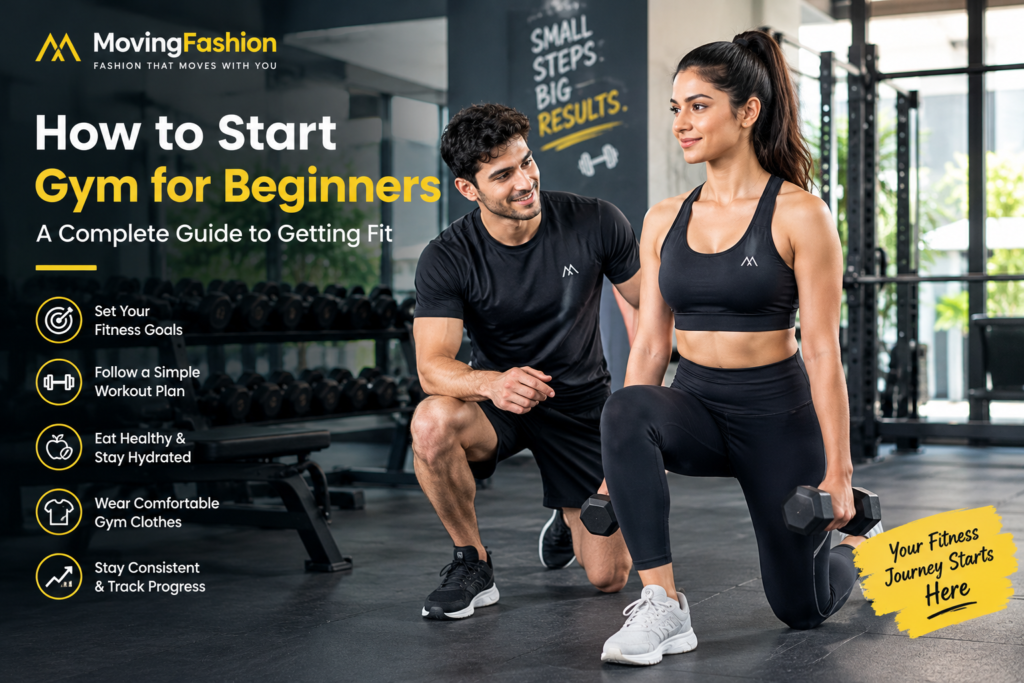
How to Start Gym for Beginners: A Complete Guide to Getting Fit
share Starting a fitness journey can feel confusing when you are new to exercise. You might wonder which exercises to perform, how many days to visit the gym, what to eat, or what clothes to wear. The good news is that you do not need to be an expert to begin. With the right plan, patience, and consistency, you can gradually build a healthy fitness routine. Learning how to start gym for beginners is about understanding the basics, setting realistic goals, and choosing exercises that match your current fitness level. Whether your goal is to lose weight, build muscle, improve stamina, or feel more energetic, taking small steps can help you develop long-lasting habits. 1. Set Realistic Fitness Goals efore joining a gym, decide what you want to achieve. Some beginners want to build muscle, while others focus on weight management, strength, flexibility, or general health. Setting clear and realistic goals helps you stay focused. Instead of expecting dramatic results in a few weeks, concentrate on improvements such as exercising regularly, increasing your stamina, or learning proper exercise techniques. If you are wondering how to start gym for beginners, begin with one or two simple goals. For example, you might aim to visit the gym three days a week and learn five basic exercises during your first month. Tracking your progress can help you recognise improvements and maintain motivation. 2. Start With a Simple Workout Plan Beginners do not need complicated workout routines. A simple plan that includes strength training, cardiovascular exercise, and rest days can provide a good foundation. You can start with two or three workout sessions per week, depending on your fitness level and schedule. Focus on learning correct techniques before increasing the weight or intensity. Here is an example of a beginner-friendly weekly gym schedule: Monday: Full-body strength training Tuesday: Walking or light cardio Wednesday: Rest or gentle stretching Thursday: Full-body strength training Friday: Light cardio or mobility exercises Saturday: Optional easy activity Sunday: Rest and recovery Adjust this schedule according to your needs. The best beginner gym routine is one you can follow consistently without feeling exhausted. 3. Learn the Basic Gym Exercises Understanding basic movements is an important step in learning how to start gym for beginners. You do not need to use every machine or lift heavy weights during your first visit. Start with exercises such as bodyweight squats, wall push-ups, seated rows, light dumbbell exercises, and beginner-friendly leg presses. These movements can help you practise coordination and develop strength. Ask a qualified gym trainer to demonstrate unfamiliar equipment and correct your technique. Start with light resistance and increase it gradually when the exercises feel controlled and comfortable. Avoid comparing your performance with experienced gym members. Everyone begins at a different level, and learning proper form is more important than lifting heavy weights immediately. 4. Wear Comfortable Gym Clothes The clothes you wear can influence your comfort and freedom of movement during exercise. Choosing suitable gym wear is especially helpful when you are beginning a new fitness routine. Look for breathable, moisture-wicking fabrics that help manage sweat. Stretchable gym T-shirts, comfortable training shorts, supportive leggings, and appropriate sports shoes can make workouts more convenient. When considering how to start gym for beginners, remember that you do not need an expensive wardrobe. Choose well-fitting activewear that allows you to bend, stretch, walk, and lift comfortably. At MovingFashion.in, you can explore the idea of combining fitness and style with activewear that suits your personal preferences. Prioritise comfort, fit, and functionality when selecting workout clothing. 5. Follow a Balanced Diet and Stay Hydrated Exercise works best alongside healthy eating habits. Your body needs sufficient energy and nutrients to support workouts, muscle recovery, and everyday activities. Include a variety of foods in your meals, such as vegetables, fruits, whole grains, protein-rich foods, and healthy fats. Eggs, beans, lentils, dairy products, tofu, and other protein sources can help support muscle repair and development. Drink water regularly throughout the day, and pay attention to your fluid needs during exercise. Beginners should avoid extreme diets or unnecessary supplements in an attempt to achieve quick results. If you have specific nutritional needs or medical conditions, consider consulting a qualified healthcare professional or registered dietitian for individual guidance. 6. Warm Up and Give Your Body Time to Recover Before starting your main workout, spend around five to ten minutes warming up with an easy walk, gentle cycling, or dynamic movements suited to your exercise session. A warm-up gradually prepares your body for activity. After exercising, you can cool down with gentle movement and comfortable stretching. Recovery is another essential part of a beginner fitness plan. Your muscles need time to adapt to new physical demands, so avoid training the same muscle groups intensely every day. Aim for sufficient sleep and take rest days when needed. If you experience sharp pain, dizziness, chest pain, or unusual shortness of breath, stop exercising and seek appropriate medical advice. Do not push through concerning symptoms. 7. Stay Consistent and Track Your Progress One of the biggest challenges for beginners is staying consistent after the initial excitement disappears. Building a fitness habit takes time, so focus on regular effort rather than perfection. Keep a simple workout journal to record the exercises you perform, the weights you use, and how you feel after each session. Celebrate small improvements, such as completing an extra repetition or feeling more comfortable using a machine. If you miss a workout, do not give up or try to compensate with excessive exercise. Simply return to your usual schedule. Understanding how to start gym for beginners also means accepting that progress is gradual. Consistency, good technique, balanced nutrition, and proper recovery can help you build a sustainable fitness lifestyle. Conclusion Starting at the gym does not have to be intimidating. Set achievable goals, follow a simple workout plan, learn basic exercises, wear comfortable gym clothes, and support your training with balanced nutrition and adequate rest. The key to success is learning