
Beginner Exercises at Home: Easy Fitness Guide
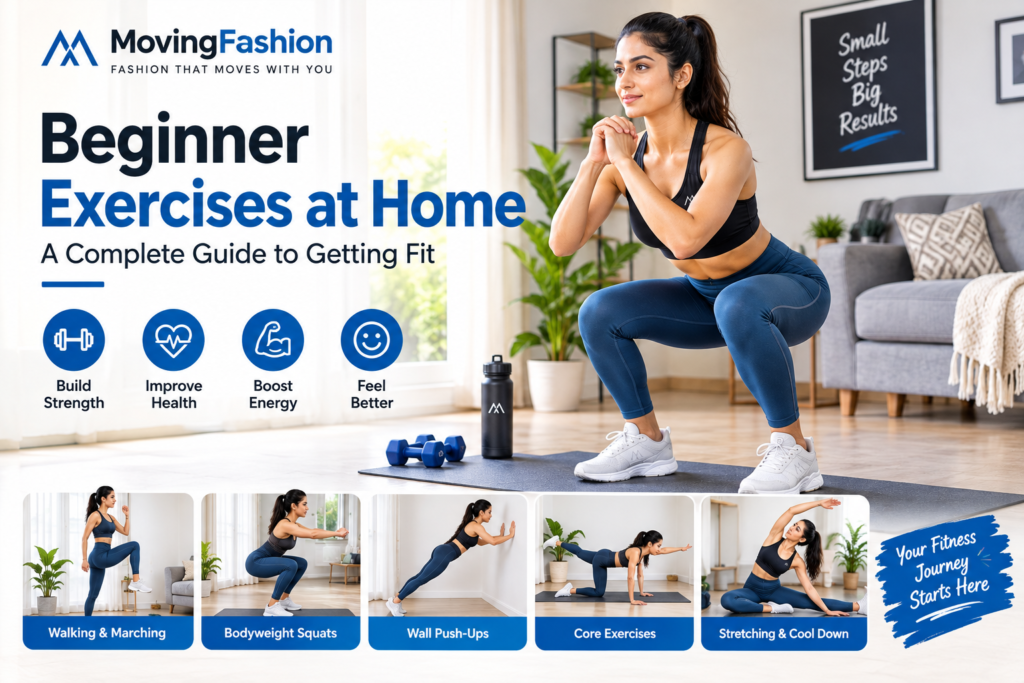
share Beginner Exercises at Home: A Complete Guide to Getting Fit Starting a fitness journey does not have to be difficult. If you are new to exercise, you can improve your strength, flexibility, and stamina by beginning with simple movements and gradually increasing your activity. You do not need expensive gym equipment or an advanced workout plan to take the first step towards a healthier lifestyle. Learning about beginner exercises at home can help you create a fitness routine that fits your daily schedule. Whether your goal is to become more active, manage your weight, build strength, or improve your overall fitness, starting slowly and staying consistent are essential. 1. Start With Simple Warm-Up Exercises Before beginning any workout, spend five to ten minutes warming up. A warm-up gradually prepares your body for physical activity and helps you transition from rest to exercise. You can start with marching in place, gentle arm circles, shoulder rolls, and easy side steps. Keep your movements controlled and comfortable, especially if you have not exercised regularly. When choosing beginner exercises at home, remember that you do not need to start with intense movements. A gentle warm-up followed by simple exercises can help you build confidence and develop a routine that feels manageable. 2. Try Walking or Marching in Place Walking is one of the simplest ways to introduce more physical activity into your day. If you have enough space, walk around your home or march in place while watching a fitness video or listening to music. Start with five to ten minutes at a comfortable pace. As your fitness improves, gradually increase the duration or walk outdoors when convenient. Regular walking can support cardiovascular health, improve stamina, and contribute to your daily activity goals. You can also divide your activity into shorter sessions if you find longer workouts challenging. For beginners, the best exercise plan is one that fits your current ability and can be repeated consistently. 3. Build Strength With Bodyweight Squats Bodyweight squats are a useful beginner exercise because they work several muscles in your lower body, including your thighs and glutes. Stand with your feet approximately shoulder-width apart. Push your hips back, bend your knees, and lower yourself only as far as you can comfortably manage. Keep your movements controlled, then return to standing. Start with one or two sets of five to ten repetitions. If a full squat feels difficult, practise sitting down on a sturdy chair and standing up again. Including squats in your beginner exercises at home routine can help you practise everyday movements and develop lower-body strength. Focus on good technique rather than trying to complete a large number of repetitions. 4. Strengthen Your Upper Body With Wall Push-Ups Wall push-ups are a beginner-friendly alternative to traditional floor push-ups. They help you practise pushing movements while using a more manageable level of resistance. Stand facing a wall and place your palms against it at approximately shoulder height. Step back slightly, bend your elbows to bring your chest towards the wall, and push yourself back to the starting position. Begin with five to ten controlled repetitions. Keep your body aligned and avoid rushing through the movement. As you become stronger, you may progress to push-ups against a sturdy countertop or another stable elevated surface. Choose a variation that allows you to maintain proper form without pain. 5. Improve Core Strength With Beginner-Friendly Exercises Your core muscles help support your body during movement and everyday activities. Beginners can start with simple exercises such as standing knee raises, gentle abdominal bracing, or a modified bird-dog exercise. For a bird-dog, begin on your hands and knees on a comfortable surface. Slowly extend one arm and the opposite leg, keeping your torso steady, then return to the starting position and switch sides. Perform a few controlled repetitions on each side. Move slowly and stop if you experience discomfort. These beginner exercises at home can help you practise balance, coordination, and core control. You do not need to perform hundreds of crunches to begin developing a stronger core. 6. Create a Simple Weekly Workout Routine A basic schedule can make it easier to turn exercise into a habit. Beginners should allow time for recovery and adjust the routine to their current fitness level. Here is a simple example: Monday: Walking, squats, and wall push-ups Tuesday: Gentle walking and stretching Wednesday: Squats, wall push-ups, and core exercises Thursday: Rest or light activity Friday: Walking and a short full-body workout Saturday: An enjoyable activity, such as cycling or dancing Sunday: Rest and recovery Begin with short sessions and increase your activity gradually. Adults are generally encouraged to work towards at least 150 minutes of moderate-intensity aerobic activity per week, alongside muscle-strengthening activities on two or more days. If you are starting from a low activity level, doing less initially and building up is a sensible approach. 7. Wear Comfortable Clothes and Stay Hydrated Your workout clothing should allow you to move freely without rubbing, pinching, or restricting your movements. Breathable T-shirts, flexible shorts, comfortable leggings, and supportive footwear can make exercise more enjoyable. You do not need expensive activewear to begin. Choose clothes that fit well and suit the activities you perform. At MovingFashion.in, fitness and style can come together through activewear designed for an active lifestyle. Comfortable gym wear can help you feel prepared whether you exercise at home, visit a gym, or walk outdoors. Drink water regularly throughout the day, and pay attention to your needs during exercise, particularly in hot weather. Stop if you feel unwell, and seek medical advice for concerning symptoms. Conclusion Getting fit begins with small, achievable steps. Walking, bodyweight squats, wall push-ups, and simple core exercises can help beginners build a foundation without complicated equipment. The key to successful beginner exercises at home is consistency, correct technique, and gradual progress. Choose activities you enjoy, give your body time to recover, and celebrate improvements along the way. You do not have to change